When the Future Reflects Back: Research, AI and the New Feedback Loop
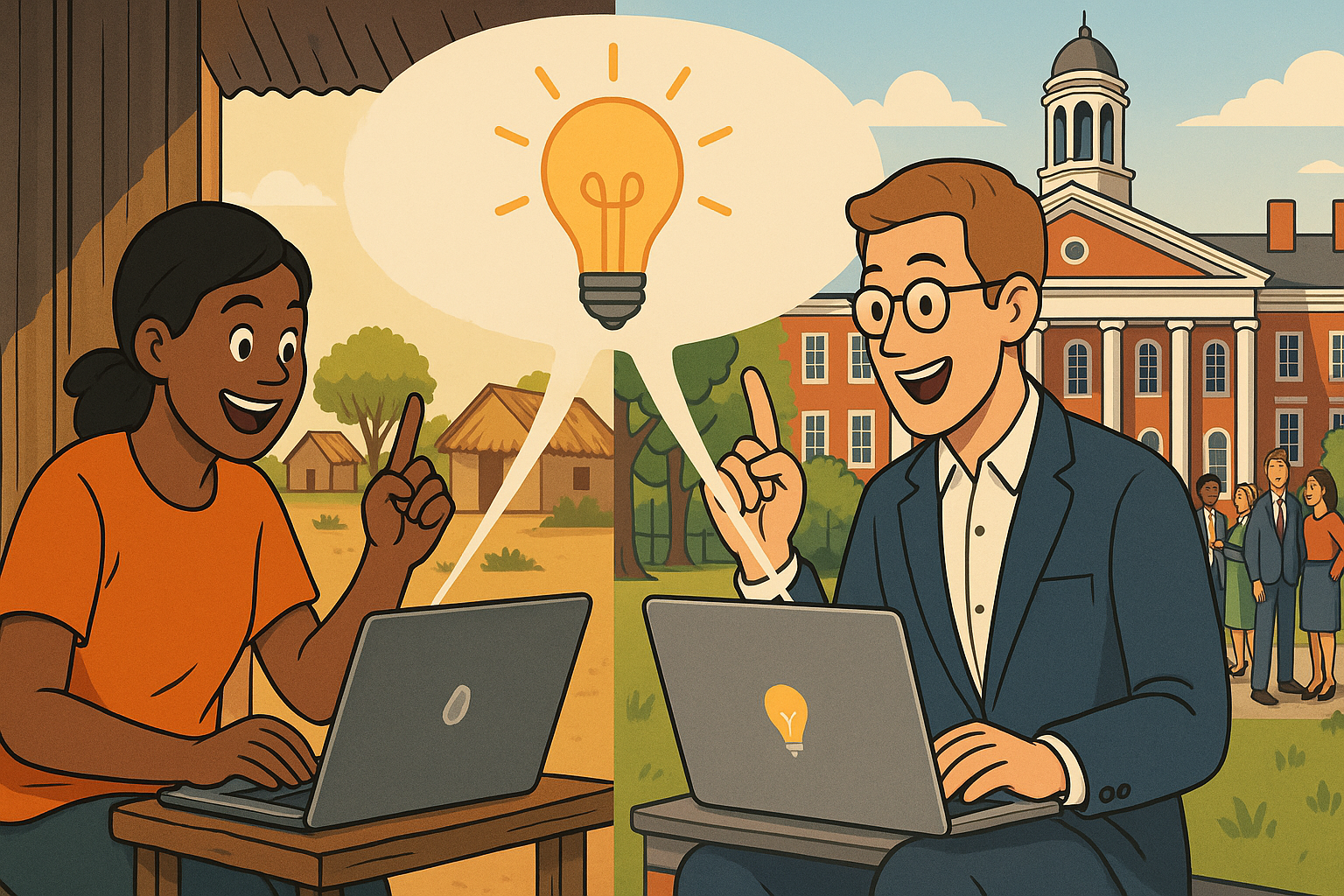
Table of Contents
Introduction
This morning, an email from Academia.edu caught me off guard—in the best way.
Apparently, their new AI tool had automatically reviewed my MIT graduate thesis—the one I wrote in 2005 as part of my Master’s program in Design and Computation. No request on my part, no heads-up. Just a simple notification:
“An AI review has been generated for your paper.”
Here’s the review, if you’d like to read it.
Now, this thesis isn’t some forgotten piece of work. It was carefully written, deeply considered, researched and—like so much academic research—put into the world with the hope that it might one day resonate with others. It was digitized by MIT’s own library (Dspace) and later was accessible via platforms like Academia.edu, where it has been cited or read by other researchers over the last few years.
But this AI review still felt like something new.
A sweet surprise.
A moment that made me pause.
AI and the New Feedback Loop
What struck me wasn’t just what the AI wrote—it was what it represented.
We are entering a time when the feedback loop between creator and audience is accelerating. Tools like AI are making it easier—and faster—for researchers, writers, designers, and makers of all kinds to get insights on their work. Not just long after publication, but sometimes instantly. Not just from peers or mentors, but from intelligent systems trained to recognize patterns, coherence, strengths, and areas for refinement.
Of course, in my opinion, this isn’t a substitute for deep academic review or human dialogue. But it is an interesting companion—especially for those of us brave enough to put our work into the public eye, not knowing who might read it or when.
This automatic review reminded me that even years later, our work can find new meaning. It can be reflected back to us in ways that reignite our curiosity, validate our clarity, or point us in new directions.
Faster Insight, Wider Reach: The Future is Listening
It also made me wonder:
- What if more of us felt encouraged to share our ideas earlier, knowing that feedback doesn’t have to take months or years to arrive?
- What if students, independent researchers, or creatives without traditional hi-tech platforms could access the same kind of feedback loop? How might this accelerate innovation from different parts of the world?
- How might it reduce the loneliness of working in silence, unsure if anyone will ever engage?
- What if AI becomes not just a mirror of our past work—but a motivator for what comes next?

So if you’re sitting on something—an idea, a draft, a design—maybe this is your nudge.
Put it out there. Let it live.
Let the world (and maybe even an AI) tell you what it sees.
Because sometimes, the future has a way of circling back to say:
“Hey—you’re still part of the conversation.”
With curiosity and gratitude,
Triptiji
