What Greek Halva Taught Me About India, Greece and Ancient Globalization
A Greek Dessert, an Indian Question, and a Silk Road Mystery
Table of Contents
Introduction
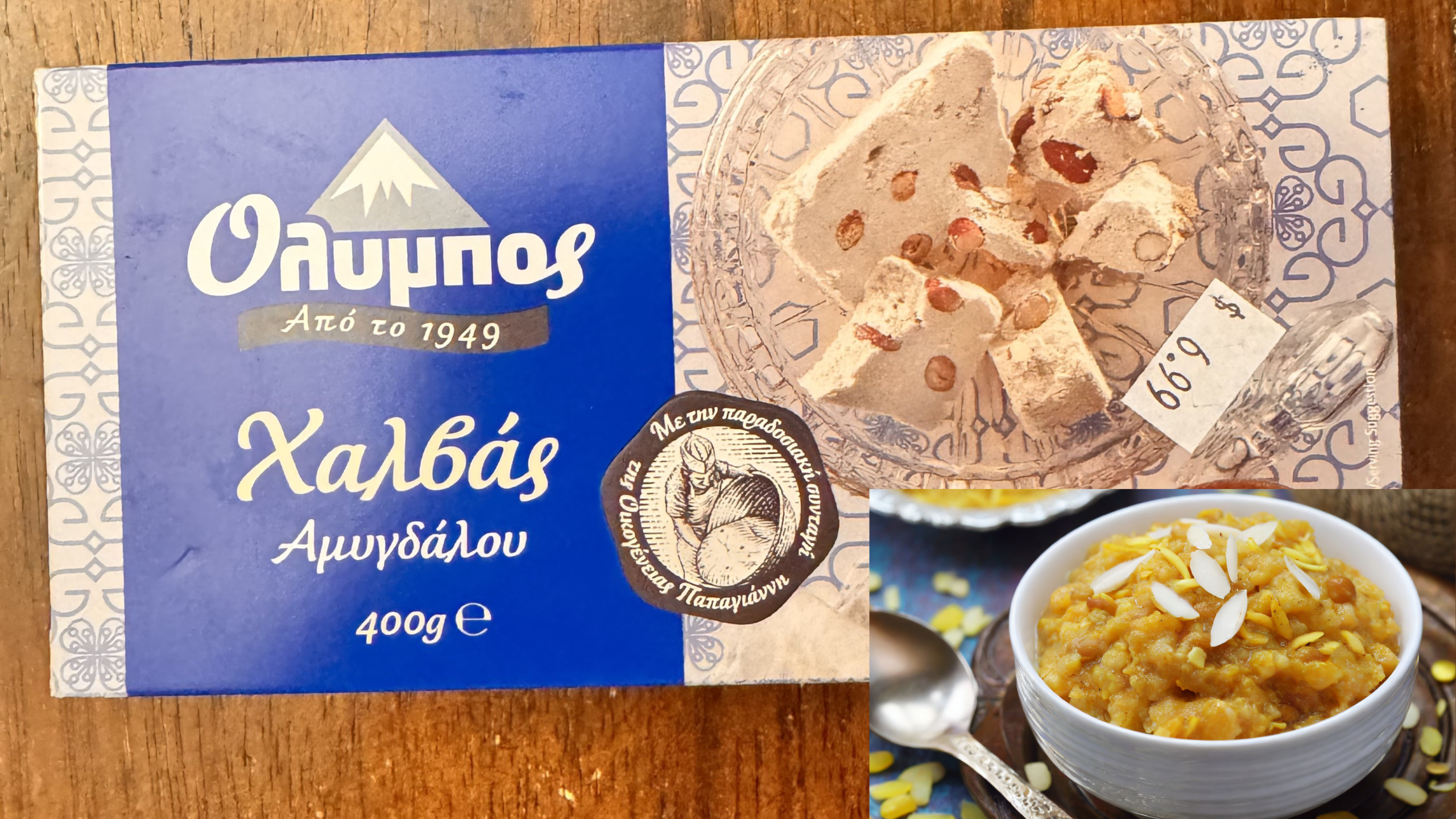
A few weeks ago, I picked up several varieties of sesame halva (or halwa) from a local Greek grocery store, Sophia’s Greek Pantry.
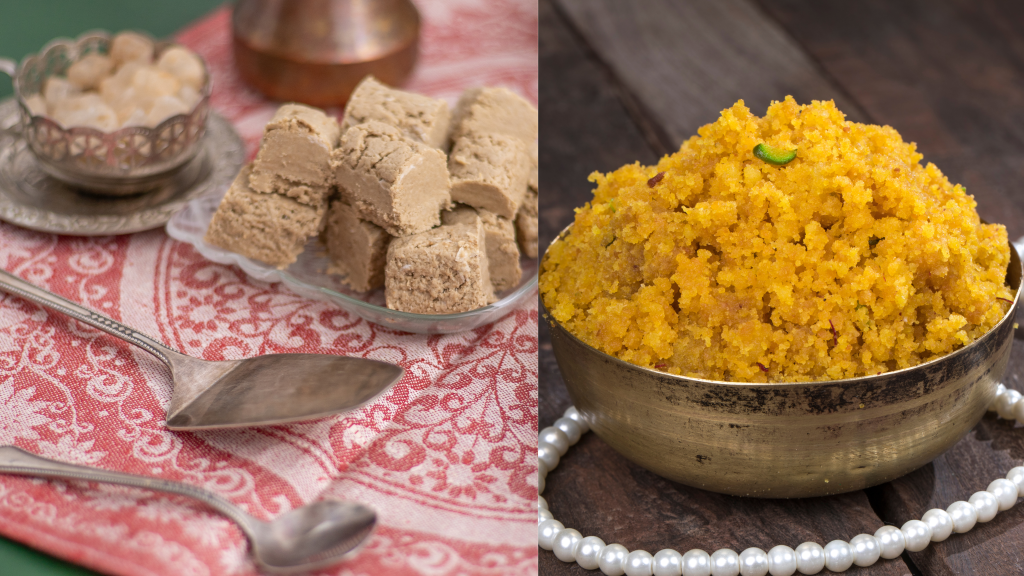
I had tasted halva before in Middle Eastern restaurants and markets, but this version felt different. It was made primarily from tahini (ground sesame), with flavors like pistachio, cocoa, and vanilla. The texture was what fascinated me most. It was dry, slightly flaky, almost fibrous, yet somehow melted in the mouth at the same time.
I was hooked.
As I happily worked my way through the different flavors, a question popped into my head.
“Wait a minute… isn’t this called halwa in Hindi as well (in India)?”
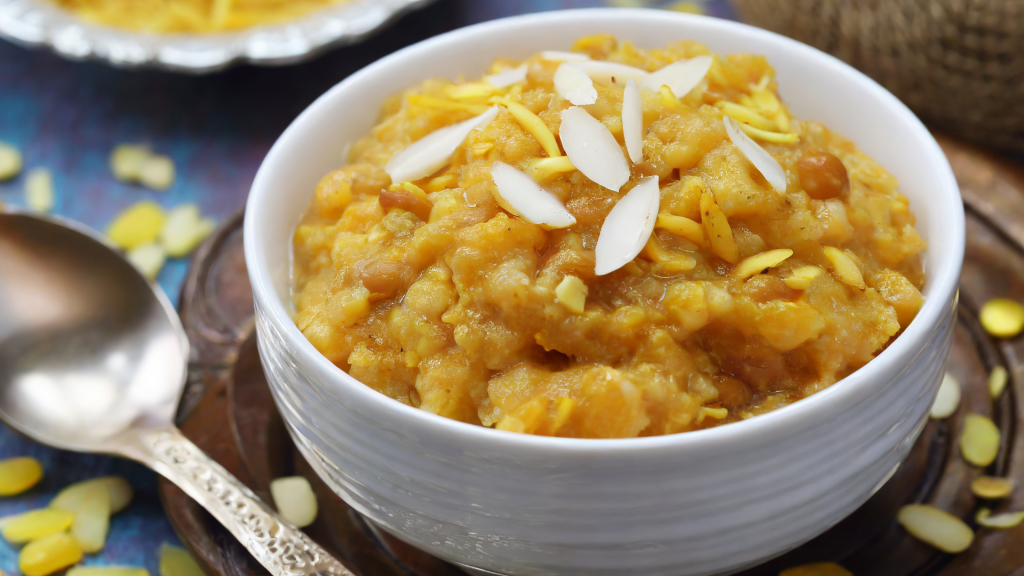
As an Indian, the word immediately felt familiar. Growing up, halwa was not a Greek dessert. It was warm gajar halwa made from carrots and ghee. It was rich moong dal (lentil) halwa at weddings. It was sheera made from semolina during festivals. It was badam (almond) halwa, pumpkin halwa, and countless other regional variations.
The word was familiar. The concept was familiar. Yet here I was, standing in a Greek grocery store, holding something that looked nothing like the halwas I knew.
And because I can never leave a good historical mystery alone, I decided to investigate.
My First Theory: Surely This Came from India
At the time, I was also reading William Dalrymple’s book The Golden Road.
The book explores how India influenced large parts of Asia through trade, religion, science, textiles, spices, ideas, and culture. It tells the story of merchants, monks, and travelers carrying Indian goods and ideas across the Indian Ocean and the Silk Road long before modern globalization existed.
So naturally, I formed a theory. Perhaps India had exported both sesame and halwa to the Middle East and Greece. It seemed plausible.
After all, sesame has been cultivated in India for thousands of years. Ancient Indian traders were shipping spices, cotton textiles, dyes, beads, and countless other commodities throughout Asia and beyond. Maybe halwa was another one of India’s exports.
It turns out I was only half right.
The Plot Twist
The more I researched, the more surprising the story became.
The word “halwa” does not actually originate in India. It comes from the Arabic word halwa, meaning “sweet.”
Food historians generally trace the origins of the halva family of desserts to Persia and the broader Middle East. Over centuries, different cultures created their own versions using flour, nuts, sesame, sugar syrups, and other local ingredients.
The word and many halwa-making traditions eventually traveled eastward into India through Persian, Central Asian, and later Mughal influences.
In other words, the name “halwa” likely arrived in India from the west, not the other way around!
I had completely guessed wrong. And yet, I had also stumbled onto something fascinating.

The Sesame Connection
While the word may have traveled from Persia and Arabia into India, one of the most important ingredients in Greek halva may have made the opposite journey.
Sesame is one of humanity’s oldest cultivated crops.
Many historians believe that sesame was first domesticated in the Indian subcontinent thousands of years ago. Archaeological evidence shows that sesame was being cultivated and traded from ancient India to Mesopotamia long before the rise of Greece, Rome, or the Islamic empires.
Which means the story may have looked something like this:
- India exported sesame westward.
- Persian and Middle Eastern cultures transformed sesame into tahini and sesame-based sweets.
- The Ottoman Empire later spread sesame halva across the eastern Mediterranean.
- The Greeks embraced it and made it their own.
- Meanwhile, the word halwa and various halwa traditions traveled eastward into India, where Indians reinvented the dessert in hundreds of unique ways.
A culinary exchange moving in both directions across continents.
Ancient Globalization Before Globalization
What I love most about this story is how it challenges our modern assumptions. We often think globalization began with airplanes, container ships, and the internet. But people were exchanging goods, ideas, languages, beliefs, and recipes thousands of years ago.
A sesame seed grown in ancient India could travel west. A Persian sweet-making tradition could travel east. A Greek merchant, an Arab trader, an Indian farmer, a Buddhist monk, and a Central Asian caravan leader might all unknowingly contribute to the evolution of a single food. Not through conquest. Not through political treaties. But through ordinary human curiosity and commerce. Someone tasted something delicious and decided to take the idea home.
A Piece of Halva, A Piece of History
The next time I eat a piece of Greek sesame halva, I suspect I will enjoy it even more. Not just because it tastes wonderful. But because it represents something larger.
A reminder that cultures have never existed in isolation.
For thousands of years, people have borrowed from one another, traded with one another, argued with one another, learned from one another, and created entirely new traditions from those encounters.
Sometimes that history survives in a sacred text. Sometimes it survives in an ancient trade route. And sometimes it survives in a humble piece of halva sitting on a grocery store shelf.
Who knew a sweet could tell such a remarkable story?


